Automotive Workshop Invoicing: A Practical NZ Workflow
A practical invoicing workflow for NZ automotive workshops, from completed job notes through to taxable supply information and payment follow-up.
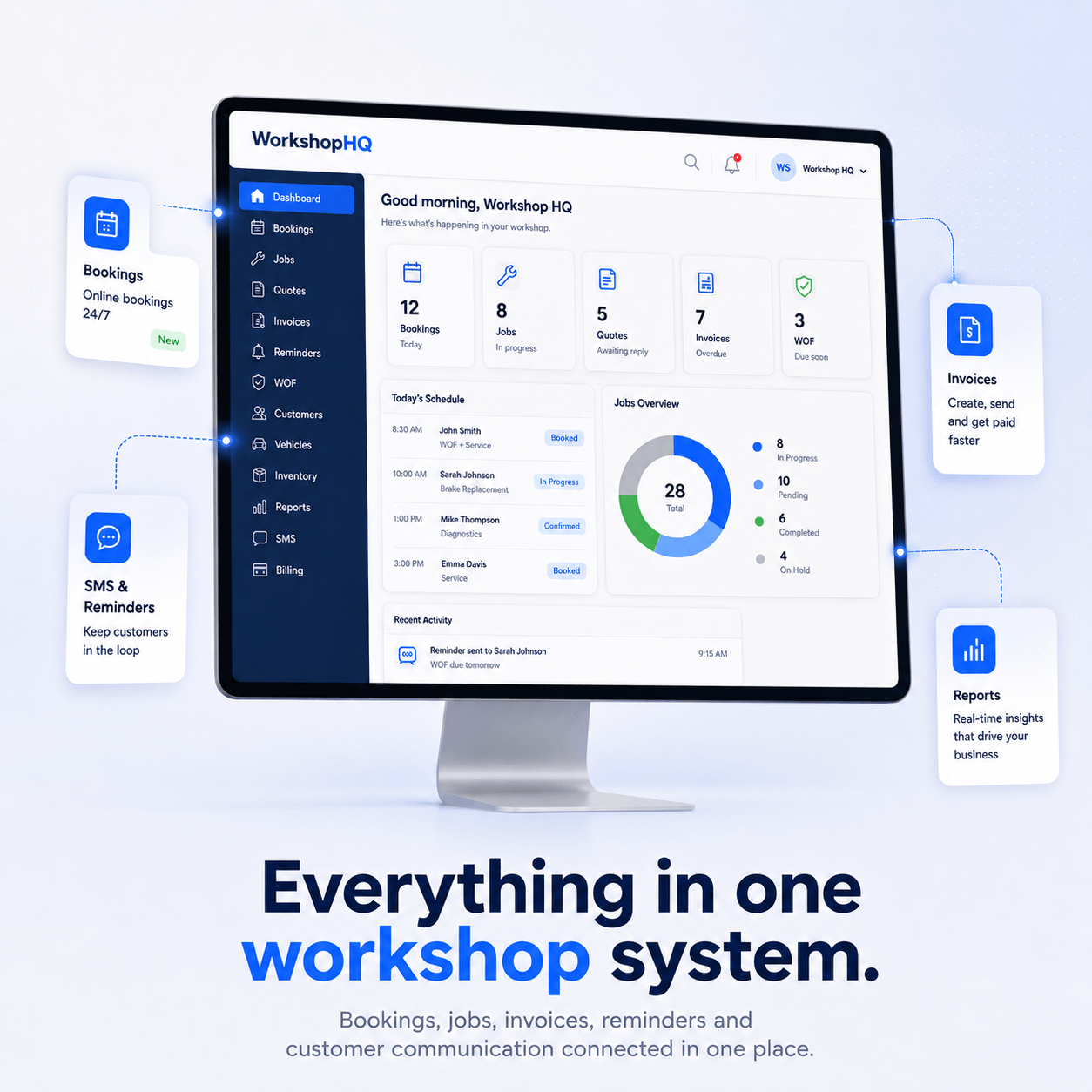
Workshop invoicing is easiest when the invoice is the final step of a well-recorded job rather than a document recreated from memory. Labour, parts, customer approvals and notes should already be available before the invoice is prepared.
Invoice from the completed job
Check that labour, parts and authorised additional work are all recorded. This helps reduce missed charges and prevents work appearing on the invoice that was never approved.
Use descriptions customers can recognise
Invoice lines should help the customer connect the charge to the work that was discussed. Internal shorthand may save typing but can create confusion later.
Keep the GST record requirements in mind
IRD replaced the old mandatory 'tax invoice' terminology with taxable supply information rules from 1 April 2023. GST-registered businesses need to keep the required information for taxable supplies, and the exact information depends on the value and nature of the supply.
Close the payment loop
- Record payment status.
- Keep the invoice linked to the customer and vehicle.
- Follow up overdue invoices consistently.
- Use credit notes or corrections where required rather than silently changing history.
Use invoice history as operational data
Invoices can help the workshop understand average job value, repeat customers, common services and unpaid balances when reporting is connected to the rest of the system.